How it works
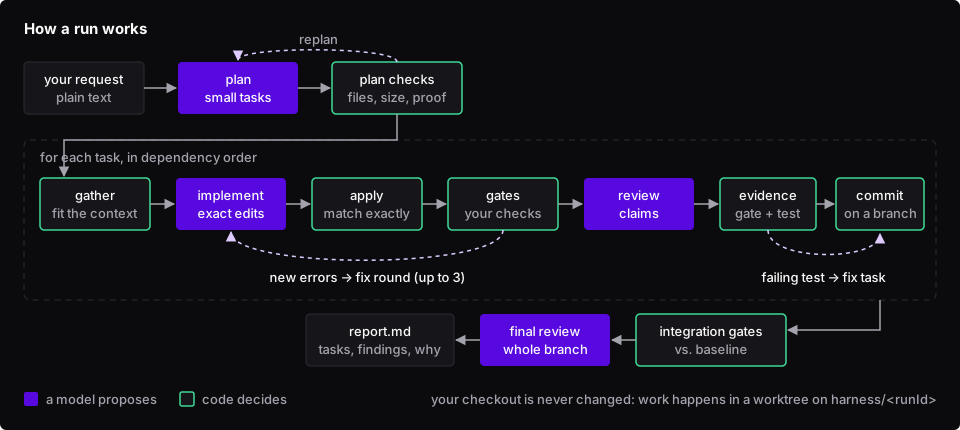
- Intake. The harness checks your repository is clean, creates a git worktree on a new branch
harness/<runId>, detects the stack, and runs your checks once to record a baseline. Anything already failing there is compared later, not blamed on the model. - Plan. A planner model splits the request into small tasks (at most 3 files each, by default), each with something that can prove it: a gate (type check, lint, tests) or a test it writes. Plans are checked in code: missing files, cycles, tasks that change nothing, tasks too big for the model’s context. Problems go back to the planner. Questions that block the plan are asked to you.
- Each task. The context is packed to fit the model’s window: the task’s files first, then signatures and summaries of the files they import. The model replies with exact search-and-replace edits; edits that do not match the file exactly are rejected with the closest lines, and the model gets one retry.
- Gates. Your own commands decide whether a task is done. New errors go back to the model with the source around them, for a few fix rounds. A model saying “done” never marks a task done.
- Review. Two independent review passes propose claims; a verifier checks each against the code it can fetch (and, for Astro, version-matched docs); a gate in code rejects or abstains on anything not backed by evidence; a challenge argues for the code. A surviving claim becomes a finding only if a test the harness writes and runs fails because of it, and then it becomes a fix task. Review never blocks a commit on its own.
- Report. Every run ends with
runs/<runId>/report.md: tasks and commits, gates against the baseline, findings, open questions, blocked tasks with their patch, every rejected model output counted by reason, and cost per role.
Your checkout is never changed. The work stays on the harness/<runId> branch until you merge it.
Built by V and Bruno LLC: Astro sites & AI tooling. Work with us →